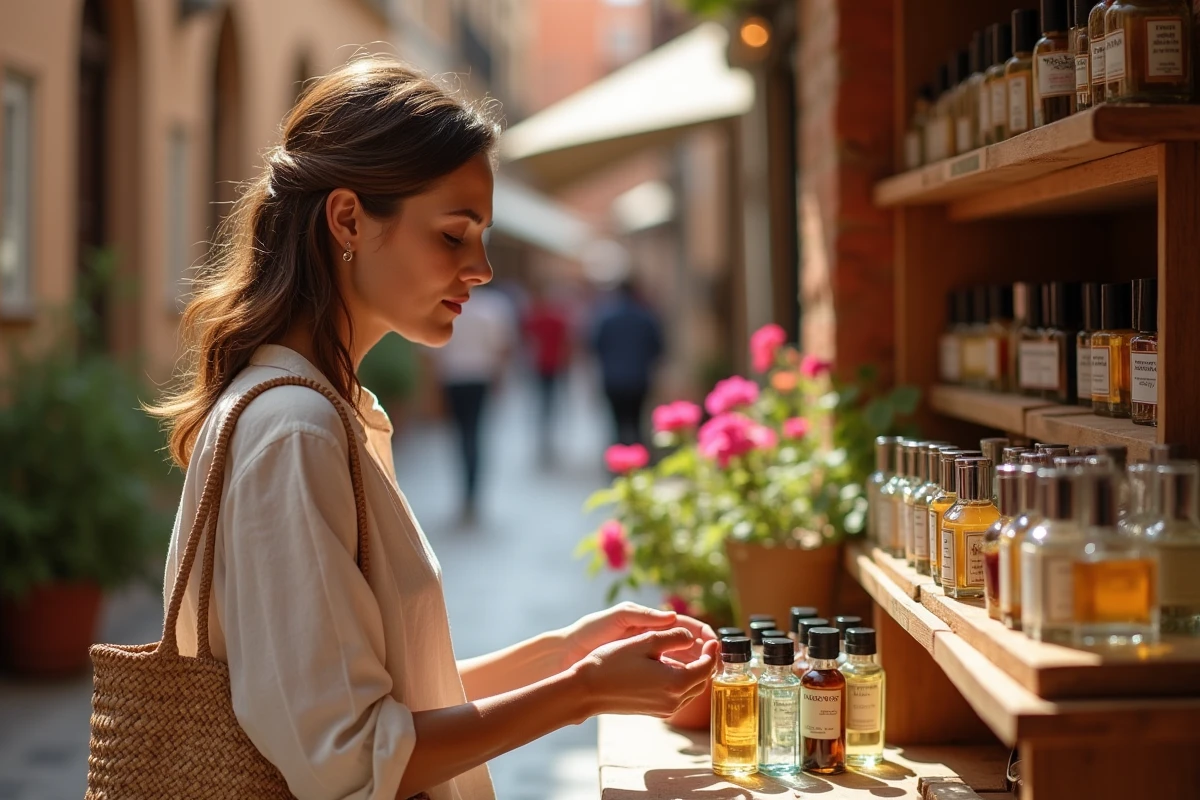
Bringing back perfumes purchased in Spain may seem trivial. Spain is part of the European Union, land border checks are rare, and perfume prices there are often lower than in France. The customs framework applicable to perfumes between two EU member countries is based on a different logic than that which governs tobacco or alcohol, and this distinction is rarely explained clearly.
Perfumes and intra-EU customs: a lack of formal quota that misleads
Unlike tobacco and alcohol, perfumes are not subject to indicative numerical thresholds in European customs regulations. There is no equivalent of cigarette cartons or liters of spirits for cosmetics.
The French customs apply the same principle to perfumes as to any consumer goods purchased in another member state: the transport must correspond to strictly personal use. As long as this condition is met, no specific quantitative limit applies.
Where things get complicated is in the assessment of this personal use. Customs officers have discretionary power. A traveler carrying several dozen identical bottles will be presumed to be acting for commercial purposes, even without a resale invoice. To find information on Voyagoo, it may be useful to cross-reference data before departure.
Since 2024, the General Directorate of Customs and Indirect Rights has strengthened this behavioral approach. The criteria examined are no longer limited to the number of items. The frequency of trips, the coherence of the journey, and resale indicators weigh as much, if not more, than the volume transported.
Cabin safety: the real constraint on perfume bottles
Articles discussing the topic often mix two distinct regulations. The first pertains to customs (the right to bring goods). The second relates to aviation security (the right to transport liquids on board).
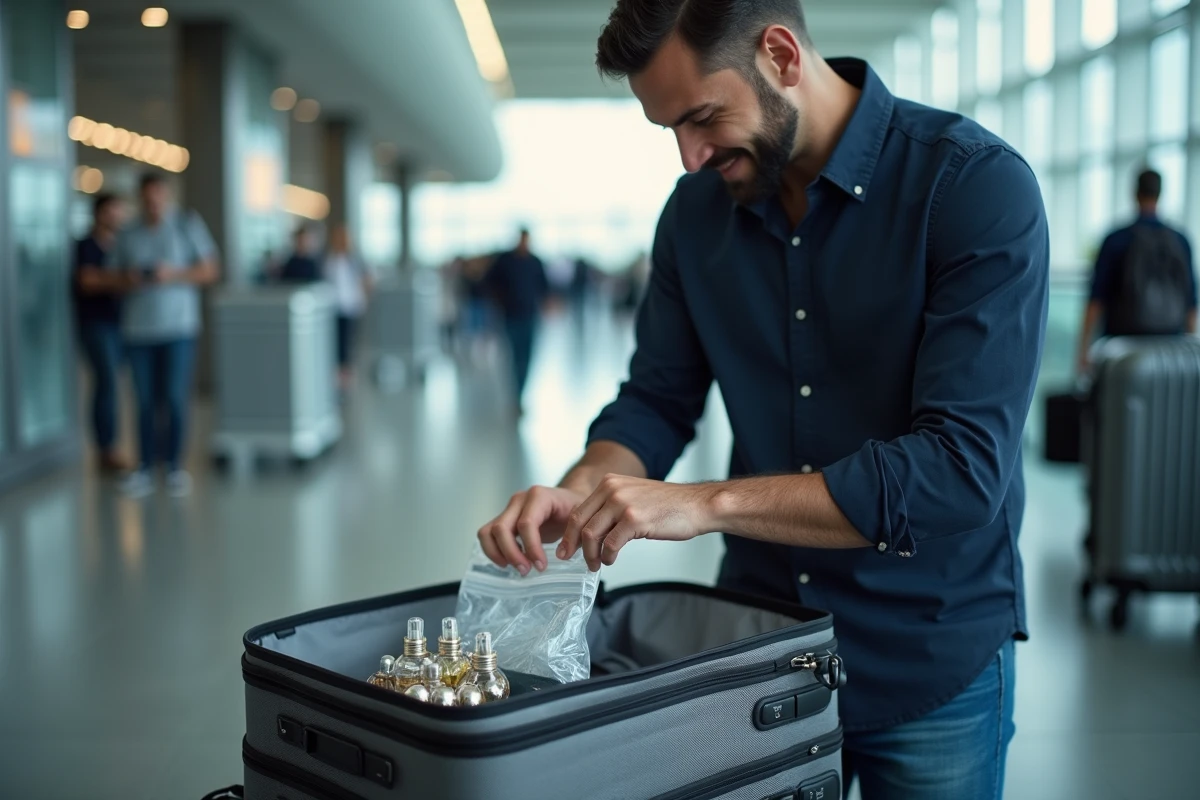
For travelers returning from Spain by plane, the rule of containers of 100 ml maximum in the cabin constitutes the most immediate constraint. Each bottle carried in hand luggage must not exceed this volume, and all liquids must fit into a resealable transparent plastic bag of limited capacity.
In contrast, checked baggage in the hold is not subject to this volume restriction per container. A 200 ml bottle placed in a checked suitcase poses no problem from an aviation security perspective. This is a distinction that many travelers are unaware of, leading them to unnecessarily limit their purchases.
What the hold changes concretely
A traveler planning to bring back several bottles has every interest in placing them in checked baggage. This removes the format constraint and avoids confiscations at the checkpoint.
The precautions to take then concern the physical protection of the bottles:
- Wrap each bottle individually in bubble wrap or a thick garment to absorb shocks
- Place the bottles in the center of the suitcase, away from the walls, to limit the risk of breakage during handling
- Keep receipts in an accessible place, separate from the bottles, in case of customs checks upon arrival
Counterfeit perfumes in Spain: the real customs risk
The issue of counterfeiting goes beyond the simple question of price. Bringing back a counterfeit perfume exposes one to product seizure and prosecution. French customs are authorized to confiscate any item bearing a protected trademark without the authorization of the rights holder, and this applies to purchases made in another EU country as well.
Border areas and certain tourist markets in Spain offer bottles at abnormally low prices. A significant price discrepancy compared to the official brand price is an obvious warning signal.
Allergens and European cosmetic regulation
Perfumes are cosmetic products subject to the European regulation on cosmetics. This text imposes precise labeling of allergens and regulated substances. A bottle purchased in Spain through an official distribution channel complies with these obligations.
A counterfeit product, on the other hand, offers no guarantee regarding its composition. Undeclared allergens or prohibited substances are common. Beyond the customs risk, it poses a direct health risk.
Andorra and duty-free: different rules for perfumes
Many travelers combine a stay in Spain with a stop in Andorra. However, Andorra is not part of the European Union, which radically changes the framework applicable for returning to France.
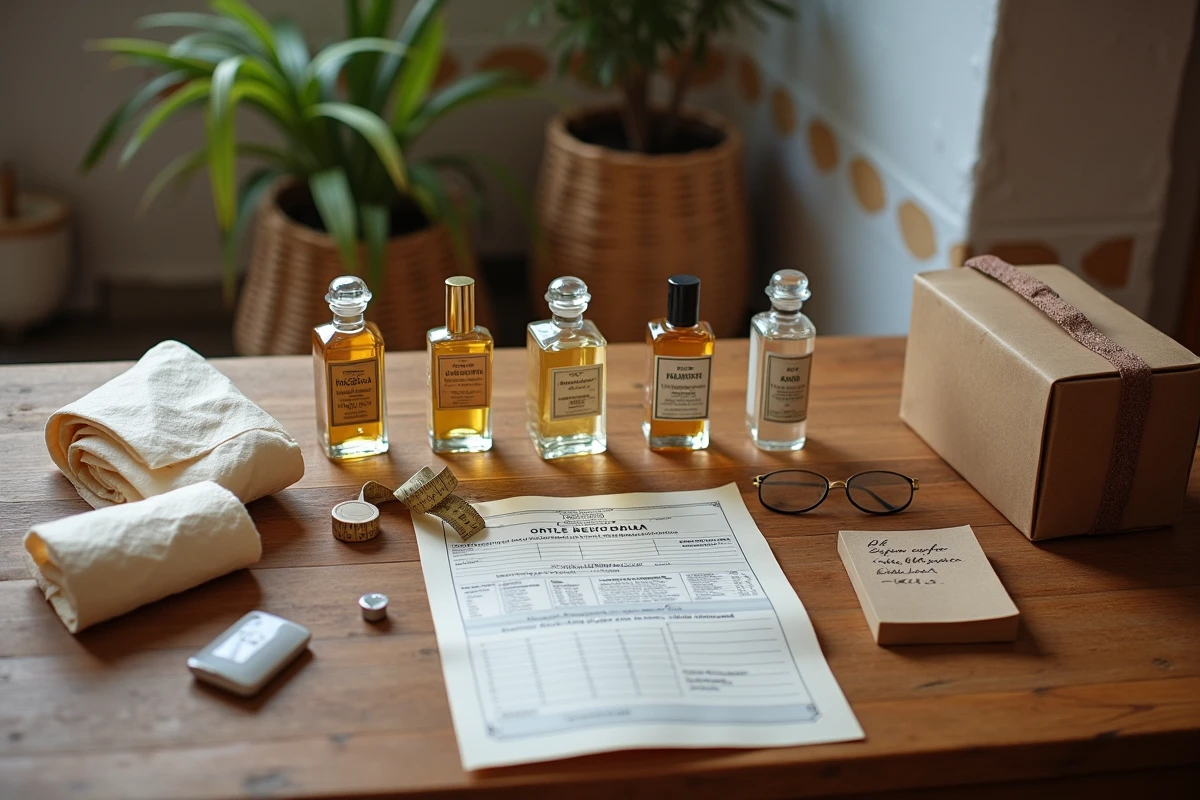
Purchases made in Andorra are subject to customs exemptions applicable to third countries. For perfumes, this means that a maximum value of goods is allowed duty-free. Beyond this threshold, customs duties and VAT apply.
Field reports vary on the rigor of checks at the Andorran border. Some travelers report systematic checks, while others pass without any control. The presence of customs officers varies depending on the periods and border posts.
- Perfumes purchased in Andorra are subject to a value exemption, not a volume one
- Purchases in Spain (excluding Andorra) are not affected by this exemption since Spain is in the EU
- Mixing Andorran and Spanish purchases in the same luggage complicates justification in case of control
Personal use or resale: where customs draws the line
The question of perfume brought back from Spain relates to a broader principle. Customs distinguishes between personal purchase and undeclared commercial activity. For products not subject to excise duty (like perfumes, unlike alcohol and tobacco), this distinction relies entirely on a set of indicators.
A purchase of three or four different bottles for oneself or as gifts will not pose a difficulty. A dozen identical bottles of the same perfume, transported regularly, will attract attention. The available data does not allow for a precise number to be set beyond which the risk becomes certain, as the assessment remains contextual.
Keeping proof of purchase, traveling with quantities consistent with the length of stay and the number of people in the vehicle or group: these are the elements that, in case of control, allow the traveler to demonstrate good faith. The burden of proof regarding the commercial nature of the transport lies with customs, but facilitating their work remains the best protection.