When the first rays of June hit a glass greenhouse, the indoor temperature can rise within hours to the point of wilting tomato plants that were vigorous just the day before. A quick, adjustable solution is then sought, one that does not turn the greenhouse into an opaque sauna.
Wooden shading frames meet this specific need: they filter sunlight without blocking it, can be put up and taken down according to the weather, and protect both the plants and the glass.
Wooden frames and thermal regulation: what happens under the glass
In a closed greenhouse, solar radiation passes through the glass and warms the soil, pots, and metal structures. The accumulated heat does not dissipate as quickly as it does outside. The result: temperature spikes that stress the roots and cause rapid evaporation of watering water.
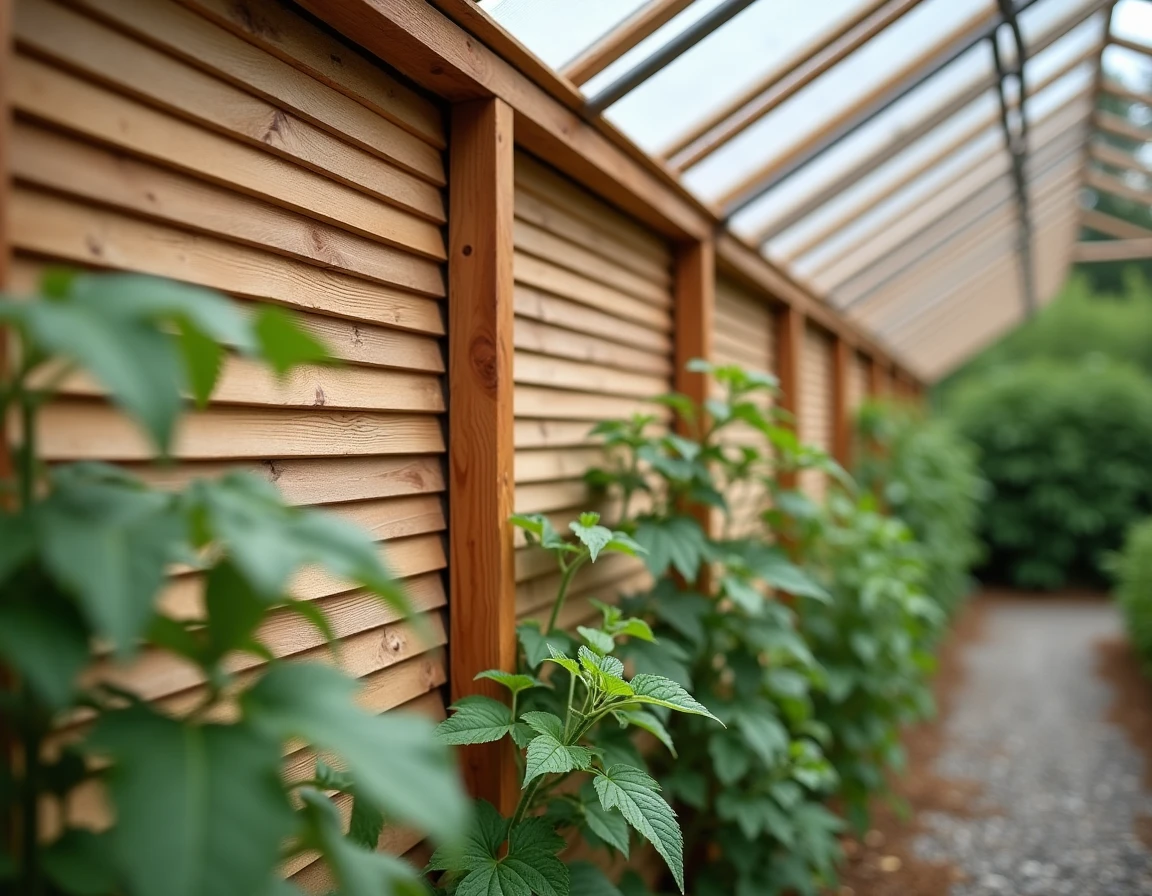
A frame placed on the roof or the frame creates a diffuse shading that reduces these spikes without cutting off the light. The spaced slats allow a fraction of the sun to pass through, sufficient for the leaves’ photosynthesis, while breaking the magnifying effect of the glass.
The technical guides from INRAE and CTIFL published since 2022 confirm this trend: diffuse and reversible solar protections lower indoor temperatures while maintaining good photosynthesis and limiting the risk of leaf burn during heatwave episodes.
This principle can be compared to that of a Venetian blind: you adjust the angle and remove the frame as soon as the sky becomes overcast. The wooden garden shading frames exploit exactly this logic of modularity, with slats assembled on flat chains that allow them to be rolled up or moved from one frame to another.
Heat-sensitive crops: which plants benefit the most
Not all plants react the same way to excess sunlight. Some scorch quickly, while others simply slow their growth. Knowing which ones to prioritize for protection allows for positioning the frames where they really matter.
Feedback from shared garden networks and AMAP, synthesized by the CIVAM Network and Terre de Liens between 2021 and 2024, highlights several particularly vulnerable crops:
- Spring lettuces, which bolt as soon as the heat settles in under the greenhouse. A temporary shading of a few hours in the middle of the day is enough to delay bolting.
- Young tomato plants and carrot seedlings, whose tender leaves burn under direct sunlight amplified by the glass. The frame filters UV rays without depriving the stem of the light needed for its development.
- Strawberry plants, sensitive to rapid soil dehydration. Shading reduces surface water evaporation and spaces out watering.
The advantage of a wooden frame over a shading cloth lies in its ease of removal. Cloths often remain in place all season, even when the sky is overcast for several days. This deprives the plants of light without reason. With a frame, you adjust the shading day by day, even by half-day.
Local wood and sustainability: choosing a frame that lasts
Pine remains the most common species for shading frames. Slats are available in two sections (5 x 24 mm or 7 x 24 mm), assembled with flat galvanized steel chains at about thirty slats per linear meter. The choice of section mainly depends on the intended treatment.
Thermal, chemical treatment, or raw wood
Thermal treatment (ThermoWood process) heats the slats to improve their dimensional stability and resistance to fungi and insects, without chemicals. Feedback varies on this point: thermally treated wood becomes more brittle, which suggests opting for 7 mm slats if this option is chosen.
Chemical treatment by soaking offers classic insecticidal and fungicidal protection. Untreated natural wood is suitable for short-term uses or for gardeners who prefer to apply linseed oil or a saturator themselves.
Several communities in Île-de-France and Occitanie have integrated frames made from local wood (chestnut, Douglas fir, larch) into their sustainable development charters since 2020. The goal is to reduce the carbon footprint associated with the importation of metal and plastic structures. For a garden or a domestic greenhouse, prioritizing a local species shortens the logistics chain and ensures wood suited to the region’s climate.
Wooden frames or synthetic shading cloth: concrete selection criteria
We are often asked: why not simply buy a polyethylene shading net, which is cheaper to purchase? The answer lies in three points that go beyond simple price comparison.
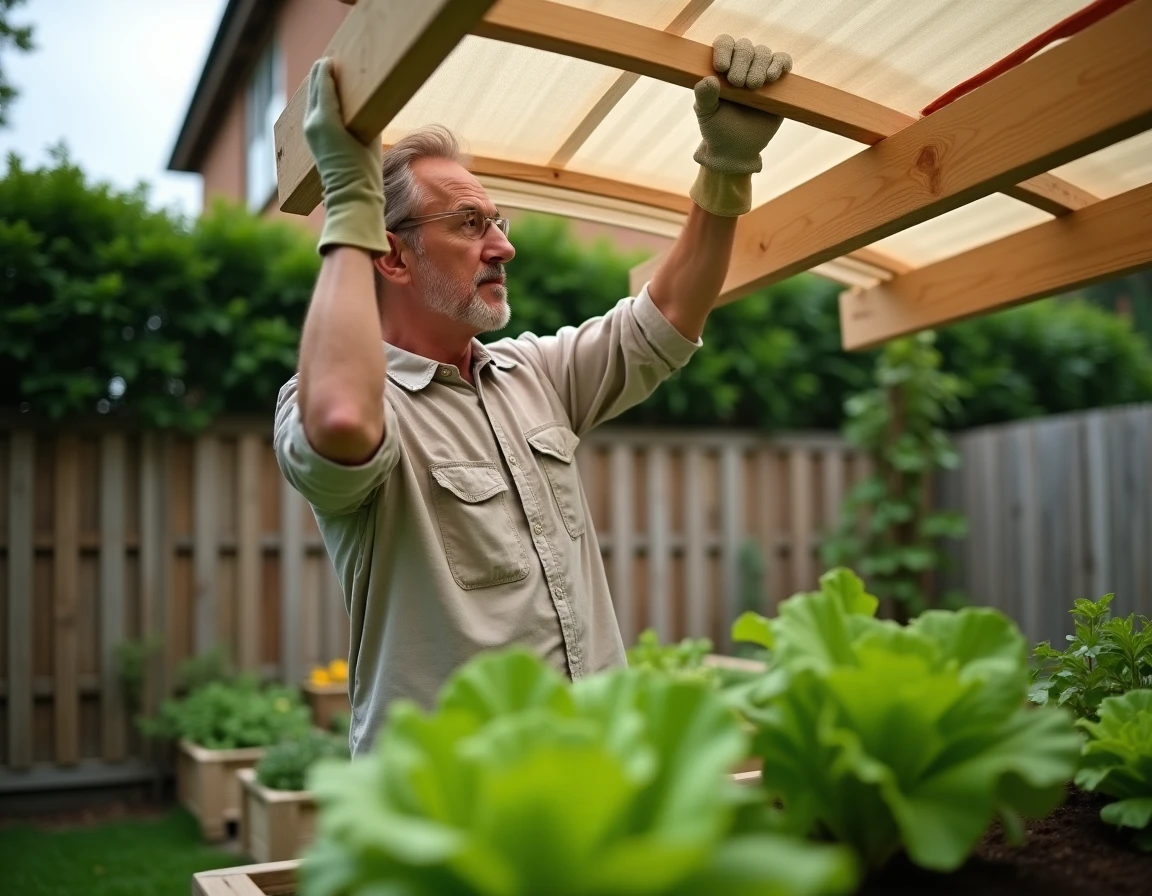
- Real modularity. A wooden frame can be rolled up, moved from one frame to another, and placed on a greenhouse roof or a veranda without permanent fixation. A synthetic net, once stretched and fixed, stays in place.
- Hail protection. The wooden slats absorb the impacts of hailstones and protect the greenhouse glass. A synthetic net offers no mechanical resistance against hail.
- Ecological longevity. Wood can be recycled or composted at the end of its life, whereas a plastic net ends up as non-recyclable waste. A well-maintained frame lasts over a decade of use.
The initial cost of a wooden frame is higher than that of a basic net. The difference is amortized over time, but one must accept a higher initial investment. For large greenhouse areas, custom manufacturing allows each frame to be adapted to the exact dimensions of the glass panels, avoiding approximate cuts and material waste.
Choosing a wooden frame for your greenhouse or garden involves a trade-off between immediate cost and long-term benefit. Heat-sensitive crops gain adjustable shading, the glass gains physical protection, and the gardener retains control over the amount of light that enters. A simple tool that bridges traditional horticulture and current climatic constraints.