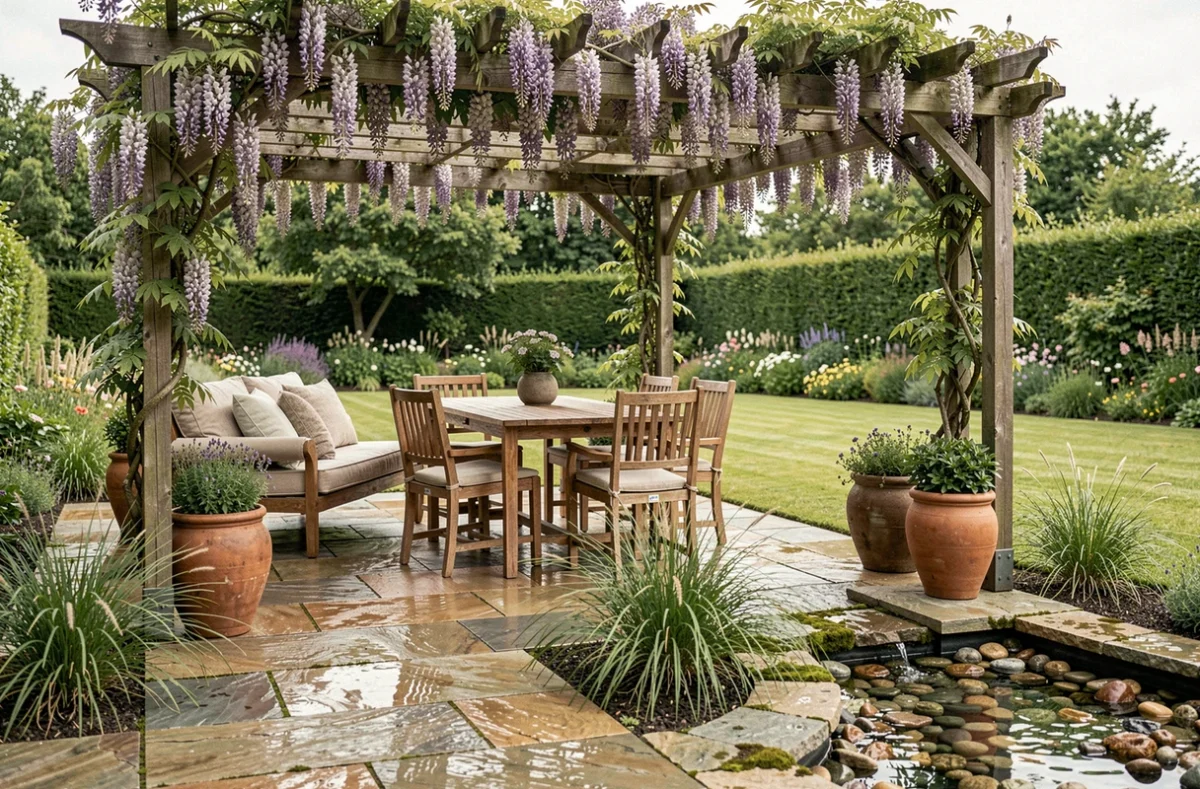
The outdoor design of a garden is no longer limited to choosing garden furniture and a few plants. French regulations on water management have recently evolved, climate constraints weigh on the choice of plants, and the available materials raise questions of sustainability that inspiration catalogs do not always address. Transforming a garden into a functional living space requires considering these parameters before starting work.
Water management in the garden: what the 2024 decree changes concretely
Since September 1, 2024, the decree no. 2024-796 and the order of July 12, 2024 regulate the use of water unfit for human consumption in France. Outdoor watering with collected rainwater remains permitted. However, any installation connected to the inside of the home requires a complete separation of networks and signage indicating “non-potable water”.
This regulatory framework has a direct impact on garden design. Installing a rainwater collection tank is not enough: the project must include a filtering collector, storage sized according to the roof area and local rainfall, and an overflow directed to a stormwater management system. Field feedback varies on the ideal sizing, as rainfall can vary significantly from one region to another.
Another point to consider: during periods of drought, prefectural orders may restrict watering even with collected water, with imposed schedules depending on the local alert level. A landscaping plan that relies solely on water-intensive plants becomes vulnerable. Anticipating these restrictions influences the choice of plants and the design of planted areas.
The landscaping techniques that integrate a water recovery circuit and drought-adapted plants from the design stage offer better long-term resilience.
Choice of materials for terraces and paths: durability versus aesthetics
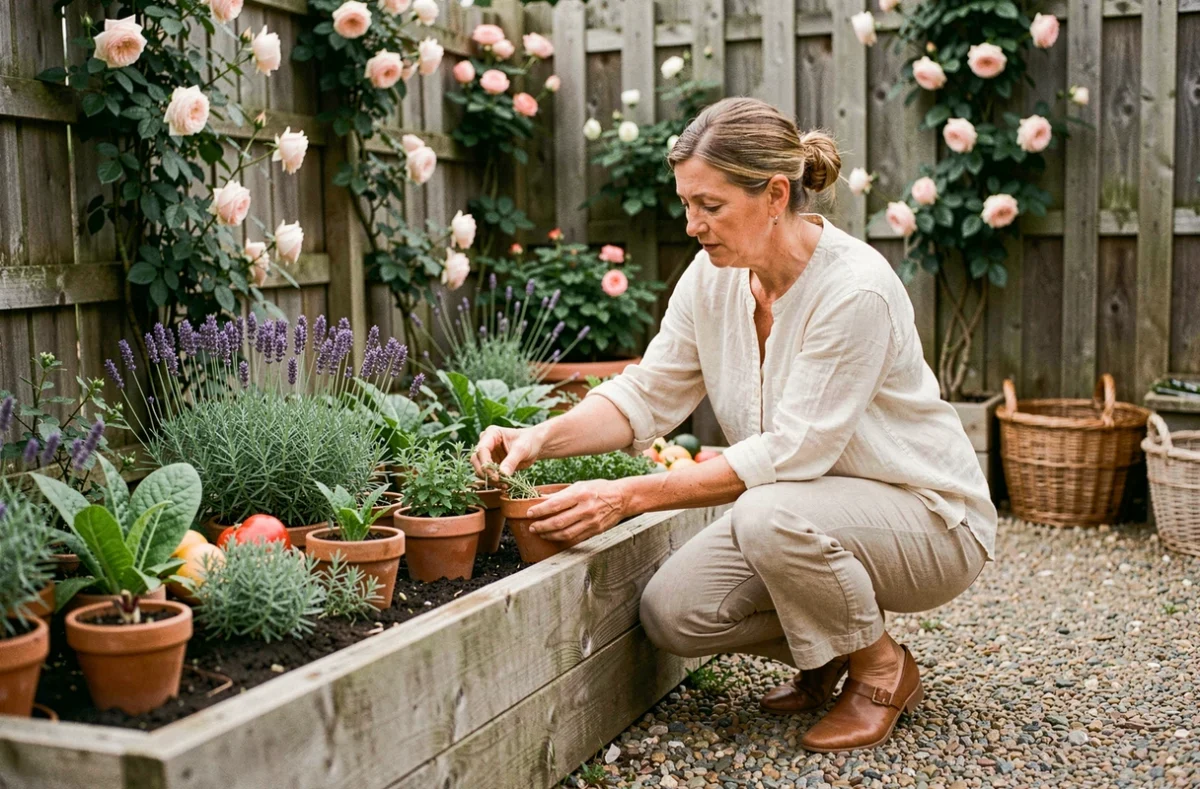
Composite wood, natural stone, porcelain stoneware, and interlocking pavers dominate outdoor design projects. Competitors list these options without always addressing their actual aging under usage conditions.
Composite wood is more resistant to moisture than solid wood, but its surface can become slippery when wet, and its color changes with UV exposure. Natural stone (granite, slate, travertine) ages well as long as it is suited to the local climate: travertine can freeze and crack in regions with harsh winters.
- Porcelain stoneware offers good mechanical resistance and limited maintenance, but its appearance can seem uniform over large areas.
- Interlocking pavers allow rainwater infiltration when laid on a sand bed, which contributes to stormwater management on the property.
- Reconstituted stone represents a cost/aesthetic compromise, but its longevity heavily depends on the quality of the concrete used in manufacturing.
The choice of material also determines maintenance over ten or twenty years. Poorly suited paving to the soil or climate can lead to costly repairs. Before choosing, checking compatibility with the soil type (clay, sandy, limestone) and local frost regime avoids unpleasant surprises.
Plants and landscaping: adapting plantings to the real climate
The trend for Mediterranean gardens (lavender, olive trees, grasses) has spread to regions where conditions are not suitable. An olive tree planted in Brittany will likely survive, but an especially cold winter can weaken it permanently.
Selecting plants suited to local rainfall and minimum temperatures remains the foundation of sustainable landscaping. The available data does not allow for generalizations, as each microclimate (exposure, prevailing wind, soil type) alters growing conditions over just a few meters.
A garden designed with local species requires less watering and maintenance than a garden planted with exotic species, no matter how appealing they may be. Native grasses, hardy perennials, and evergreen ground covers structure an outdoor space without requiring constant intervention.
Structuring planted areas to reduce maintenance
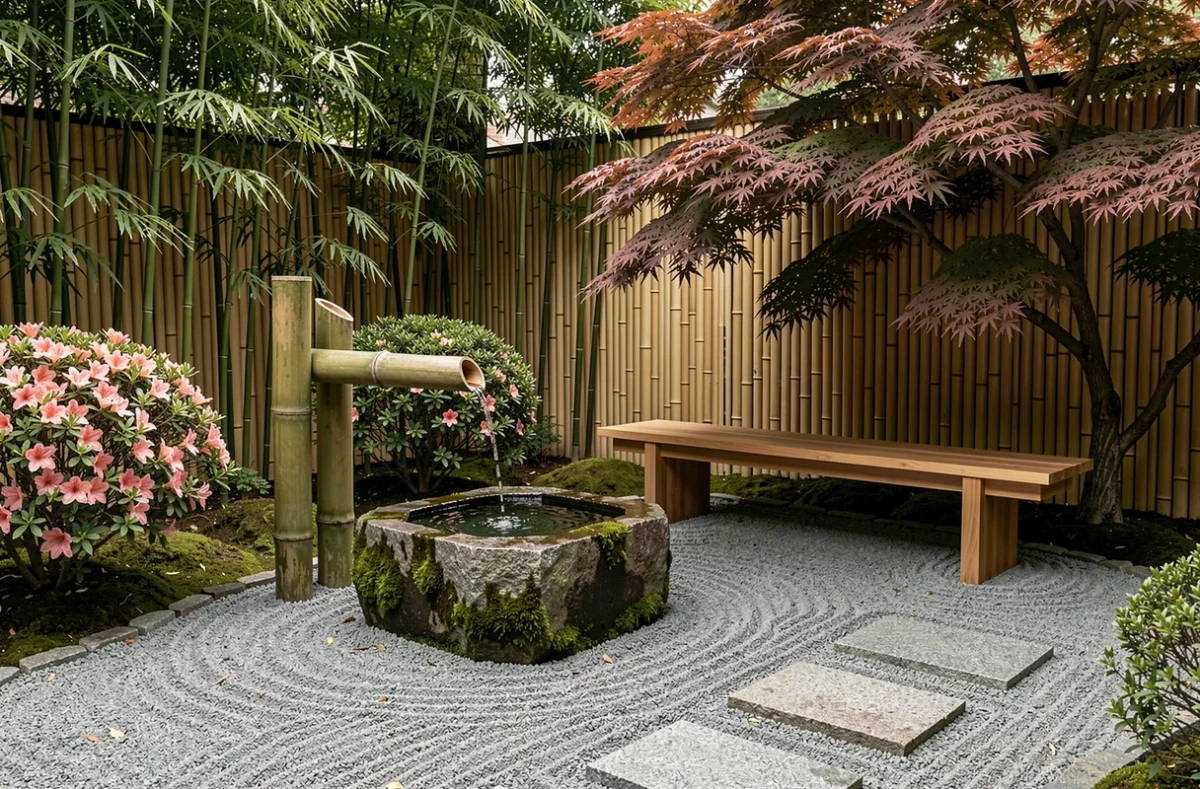
Grouping plants by water needs (hydrozoning) simplifies watering and limits waste. The most water-intensive plants are concentrated near the water source or collection tank, while drought-resistant species occupy distant or sunny areas.
This zoning logic applies not only to plants but also to ground coverings: a gravel area around dry beds, thick mulch on flower beds, a permeable surface for paths. Each zone of the garden has its own water regime, and the design must take this into account from the initial plan.
Outdoor lighting and zoning of living spaces
Lighting transforms the perception of a garden after dark, but it is not limited to placing solar lights along a path. Effective lighting distinguishes three functions: safety (steps, access), ambiance (terrace, relaxation area), and highlighting (notable tree, green wall).
Low-consumption adjustable LED spots allow for creating light contrasts that visually enlarge the space. Placing a light source at the base of a tree creates a volumetric effect that overhead lighting does not provide.
- Autonomous solar lighting is suitable for areas far from the electrical grid, but its power remains limited.
- Buried wired lighting offers more consistency and power, at the cost of a heavier installation.
- Motion detectors reduce consumption in high-traffic areas without sacrificing safety.
Defining living zones before positioning the lights avoids the “runway” effect where all paths are lit the same way. A dining area requires warm, diffused light, while a garage access needs bright, focused lighting.
Fences, privacy screens, and garden intimacy
The issue of privacy affects the comfort of using a garden, especially in urban or suburban areas. Composite privacy panels, aluminum screens, and plant hedges meet different needs.
A persistent hedge (laurel, photinia, eleagnus) filters the wind and provides a natural screen, but it takes several years to reach a sufficient height and requires one to two annual trims. Composite panels are immediately operational, require no maintenance, but create a more rigid visual boundary.
Combining a rigid structure with a climbing plant (star jasmine, clematis, ivy) allows for a blend of immediacy and naturalness. The plant softens the fence over the seasons, while the panel ensures privacy from the moment of installation.
The outdoor design of a garden benefits from being thought of as a system where water, materials, plants, and light interact. Treating each element in isolation produces a fragmented result. Starting from the constraints of the land, climate, and local regulations, then designing living spaces accordingly, remains the most reliable method for achieving a lasting outdoor space.