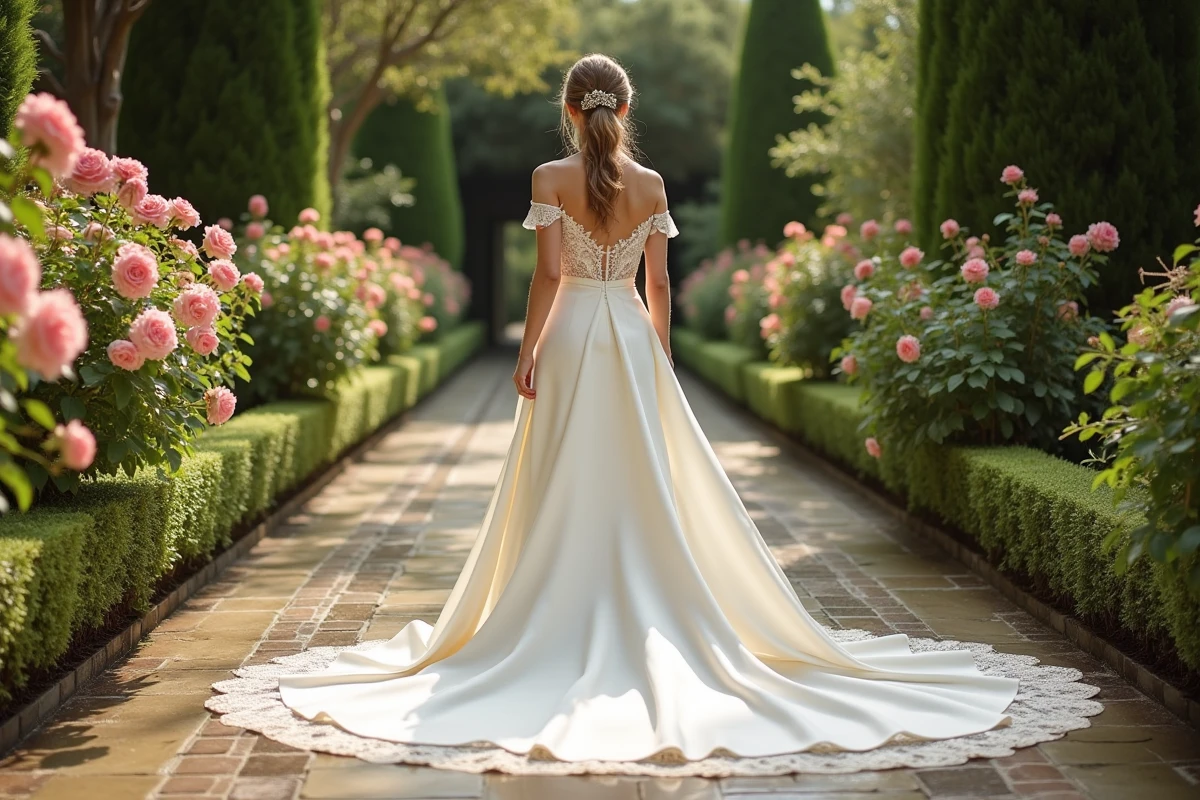
Wedding trends are evolving quickly, and couples planning their ceremony in 2025 or 2026 are faced with choices very different from those offered two years ago. What are the real differences between classic aesthetic orientations and new practices that incorporate sustainability, conviviality, and venue personalization? This article compares the main changes in wedding organization, supported by data.
Sustainable fabrics and local decor: the environmental angle of weddings 2026
Most articles on wedding trends focus on color palettes or dress cuts. The environmental impact of textile and decorative choices remains a little-explored angle, even though it significantly alters the budget and logistics.
On the attire side, recycled or certified fabrics (European linen, peace silk, organic cotton) are gaining ground in recent wedding collections. Choosing locally produced fabric reduces delivery times and transportation costs, two areas that couples often underestimate.
For decoration, decorations made from local and seasonal plants are gradually replacing imported floral arrangements. Using flowers grown near the ceremony venue helps limit the supply chain and results in fresher arrangements on the big day. This approach aligns with the green wedding trend, which is no longer just a marketing label but translates into concrete decisions regarding each expense item.
To track the evolution of these practices over the seasons, the articles from 123 Mariages allow for a comparison of available options by region and service providers.
Comparison of wedding trends: pure aesthetics vs. responsible choices
The table below contrasts the dominant orientations in wedding magazines with the emerging practices documented for 2026.
| Item | Classic aesthetic trend | Responsible trend 2026 |
|---|---|---|
| Wedding dress | Couture corsets, XXL details, imported fabrics | Certified fabrics, local linen or silk, reusable or rented dresses |
| Floral decoration | Exotic arrangements, out-of-season peonies | Local seasonal flowers, dried or recoverable potted plants |
| Reception venue | Prestigious estates, distant destinations | Nearby venues, farms or gardens within 50 km |
| Dinnerware and linens | Coordinated disposable decor | Rental dinnerware, washable fabric tablecloths |
| Entertainment | DJ, classic photobooth | Unplugged ceremonies, mobile bars, serpentine tables outdoors |
This comparison shows that responsible trends do not eliminate aesthetics but shift priorities: the budget moves from ephemeral decor to reusable elements or experiences for guests.
Unplugged ceremonies and serpentine tables: what changes for guests
According to Mariages.net, unplugged weddings without phones and mobile bars are among the strong trends for 2026. The principle is simple: guests put away their devices during the ceremony, refocusing attention on the couple and eliminating the forest of raised arms in official photos.
The infinite serpentine tables, suited for outdoor receptions, also change the dynamics of the meal. However, they require a venue with sufficient length space, naturally directing choices towards rural estates or gardens rather than enclosed halls.
- The unplugged ceremony requires clear signage and an announcement from the officiant to ensure guests participate without frustration.
- Mobile bars (craft cocktails, local wines) replace the fixed bar and help distribute flows throughout the reception space.
- Serpentine tables encourage interaction among groups of guests who do not know each other, an advantage for weddings bringing together multiple social circles.
These organizational formats create an immersive experience centered on conviviality rather than visual staging. For couples, this means more coordination work with the caterer and the reception venue, but a result perceived as more authentic by guests.
Wedding attire 2026: suits and dresses balancing boldness and textile sobriety
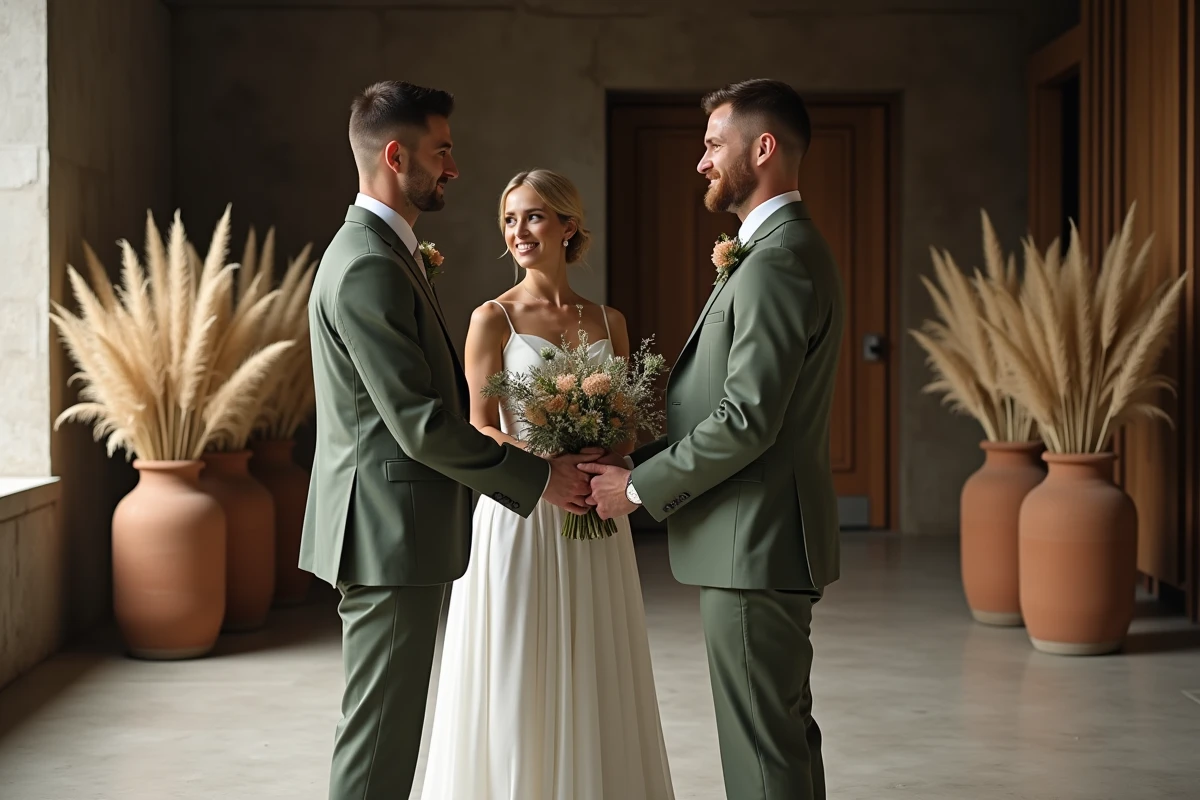
The wedding suit collections for 2026-2027, documented by Mariages.net, show a dual direction. On one hand, more fitted cuts with textured fabrics (wrinkled linen, lightweight wool). On the other hand, less conventional shades moving away from black and charcoal gray.
For wedding dresses, the 2026-2027 collections extend the trend of streamlined silhouettes while reintroducing artisanal details: handmade embroidery, lace produced in European workshops. The choice of a local workshop for alterations or creation becomes a differentiating argument for designers who communicate about their production chain.
This evolution reflects a shift in perceived value. The dress or suit is no longer distinguished solely by its cut, but also by the story of its making. Couples who document this choice on their invitations or wedding website transform the outfit into a narrative element of the ceremony.
Wedding organization: balancing trend and theme coherence
Adopting multiple trends simultaneously (unplugged, local decor, artisanal attire, mobile bar) requires a common thread. Without coherence, the wedding resembles a catalog of good ideas with no connection between them.
The strongest theme starts from the reception venue, not from a Pinterest mood board. A vineyard naturally calls for local wines, understated plant decoration, and outdoor tables. An urban loft directs towards a cocktail bar, a minimalist staging, and more architectural attire.
Couples who successfully navigate this articulation are those who first define the venue and the format of the reception, then adjust other elements accordingly. This top-down logic avoids the budgetary and aesthetic inconsistencies generated by the accumulation of trends picked separately.
The 2026 season confirms that the most sustainable wedding trends start from a location and a textile choice, not from a color palette. Couples who anchor their decisions in geography and available resources nearby achieve a ceremony that is more understandable for their guests, and a budget that is better controlled across each item.