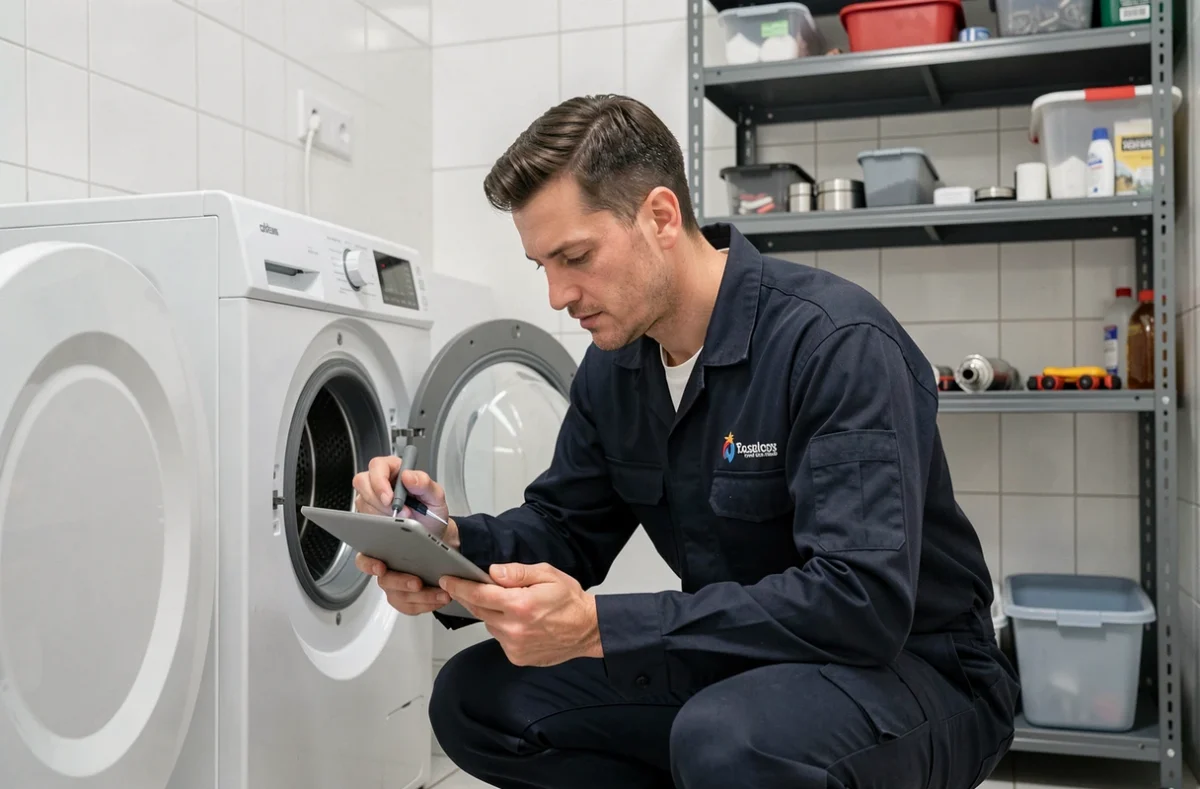
A washing machine that refuses to spin, a refrigerator that frosts up for no reason, an oven that doesn’t heat properly: these breakdowns often happen at the worst possible time. Before ordering a new appliance, consider repair first. European regulations are evolving, financial incentives are becoming clearer, and diagnostic techniques are getting simpler. Here’s what’s changing in appliance repair in 2026.
European right-to-repair directive: what applies and what’s still pending
European Directive 2024/1799 has applied at EU level since July 2024. It requires manufacturers to offer repairs outside the warranty period at a reasonable price for certain product categories. But not all types of appliances are covered.
Is your washing machine, dishwasher, refrigerator, vacuum cleaner or tumble dryer broken? These appliances fall within the categories covered by the directive, because the European Union had already set repairability requirements for them. For other equipment (food processors, coffee makers, etc.), no such obligation exists yet.
One point that’s often misunderstood: the directive has not yet been fully transposed into French law. Legislative work is ongoing, which means some provisions are not yet fully applicable in France.
These include the 12-month extension of the seller’s liability period when consumers choose repair over replacement. In practice, it’s best to check on a case-by-case basis whether your appliance falls within the scope of the directive before relying on it when dealing with a repairer or seller.
To keep up with how these rules are evolving and their local impact, SAV 35 news regularly explains the practical implications of these changes for consumers.

Repair bonus and QualiRépar scheme: how to lower the bill
The repair bonus remains one of the most practical ways to reduce the cost of appliance repairs. Linked to the QualiRépar label, this scheme provides a direct discount on the repair bill when you use an approved professional.
Many people don’t realize that QualiRépar covers far more than household appliances. It also includes electronic equipment, textiles, shoes and certain sports or DIY items. The process is straightforward:
- Find a nearby QualiRépar-certified repairer (the Ministry for the Ecological Transition provides an online directory)
- Have the fault diagnosed and get a quote showing the applicable bonus
- The discount is deducted directly from the bill, so consumers don’t have to pay upfront
- Keep the invoice and proof of repair, which help maintain the appliance’s service history if you sell it
The bonus amount varies depending on the type of appliance. The benefits go beyond immediate savings: repairing an appliance instead of replacing it reduces electronic waste, a major environmental concern.
A condition that’s often overlooked
The repairer must hold the label when carrying out the work, not just when providing the quote. Check that the label is valid before confirming the repair.
Deciding whether to repair or replace a household appliance
The question comes up with every breakdown: should you repair or replace the appliance? The answer depends on three technical criteria, not a gut feeling.
The appliance’s age compared with its estimated lifespan is the first indicator. A dishwasher that breaks down after three years of use will almost always be worth repairing. The same appliance after ten years calls for a closer look before you invest in spare parts.
The second criterion is spare-part availability. French regulations already require manufacturers to make certain parts available for several years after a product goes on sale. But this requirement doesn’t cover every part number. An experienced technician can tell you whether the part is available and compatible, and whether the repair cost is reasonable given the appliance’s remaining value.
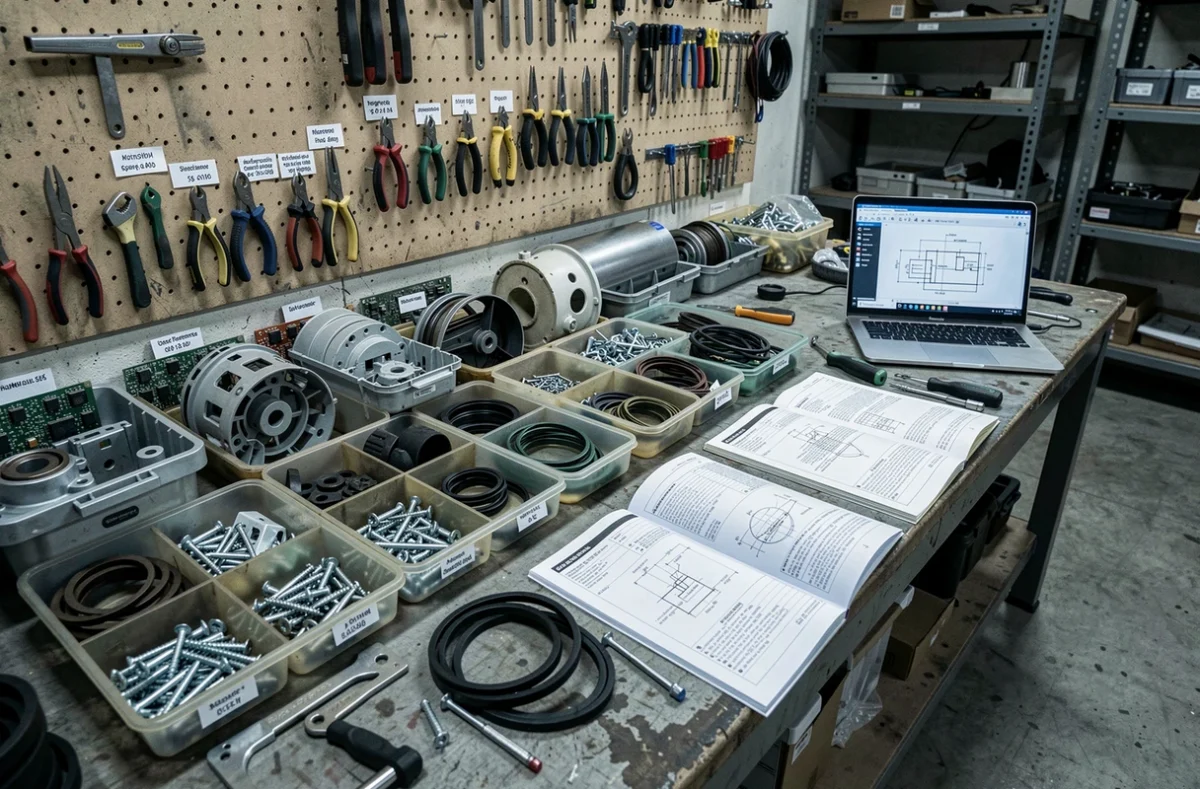
The third criterion is often overlooked: the repairability index shown on the product label. Scored out of ten, this index assesses how easy the appliance is to dismantle, whether spare parts are available and whether technical documentation can be accessed. An appliance with a high score will be easier and less expensive to repair than a model designed to be difficult to open.
A useful step before you decide
Before throwing an appliance away, ask for a full diagnosis. Some faults that seem serious (unusual noises, an error code on the display) can be fixed easily: a worn seal, a clogged filter or a capacitor that needs replacing. Labour costs are often far lower than the price of a new appliance.
Preventive maintenance: simple steps to avoid breakdowns
Most appliance repair callouts are for preventable faults. A few regular habits can add several years to the life of your appliances.
- Descale your washing machine and dishwasher every two to three months with white vinegar or a suitable product, especially in hard-water areas
- Clean the washing machine’s drain filter every 20 cycles or so to prevent pump blockages
- Dust the grille at the back of the refrigerator at least twice a year: a dirty condenser puts extra strain on the compressor and increases electricity consumption
- Check the condition of the oven and refrigerator door seals, as a faulty seal wastes energy and accelerates thermostat wear
These steps require no special tools or technical skills. They follow the same principle as changing a car’s oil: regular maintenance costs less than an emergency repair.
Appliance repair is no longer just for lone DIY enthusiasts. With stronger European regulations, a wider-reaching repair bonus and a repairability index to guide purchases, there are now plenty of ways to make appliances last longer. The best approach is to use them before something breaks, not after.