Some simple gestures, adapted to age and physical abilities, can reduce environmental impact without disrupting habits. Official recommendations emphasize the need for an inclusive ecological transition that takes into account the diversity of profiles and situations.
Public and associative initiatives are mobilizing to make sustainable practices more accessible, particularly for the elderly. This adaptation involves practical advice, clear information, and equipment designed for an easier daily life.
Why adopting ecological gestures is essential at any age
The ecological dynamic among seniors is no longer an exception. Today, engagement in the fight against climate change is emerging as a strong trend within an aging population, driven by the desire to pass on a heritage and improve the future for younger generations. In the face of increased life expectancy, this positioning is becoming clearer: reducing energy consumption, preserving resources, and ensuring the quality of life for loved ones are becoming concrete goals.
This responsibility towards future generations fuels the desire to change one’s own practices. For many, these ecological gestures are not just a new constraint, but a thoughtful commitment. Participating in sustainable development becomes part of a routine where every effort contributes to preserving the planet while making daily life easier. Seniors thus establish themselves as figures of environmental action, demonstrating that age is not a barrier to innovation in lifestyles.
Through websites like greenseniors.org, these initiatives are highlighted and shared. One can discover concrete examples, testimonials from residents who find meaning in everyday ecology. The exchange of ideas, tips, and experiences fuels a collective dynamic where even the smallest initiative has its place.
Here are some positive outcomes observed:
- Reduction in energy consumption
- Preservation of natural resources
- Improvement in quality of life
The entire society benefits from this involvement, which strengthens the image of a generation attentive to combining progress and responsibility.
What small sustainable changes are accessible and easy to implement for seniors?
Recycling, sorting, consuming locally: on the ground, seniors prove that the ecological transition happens through small steps, repeated every day. Selective sorting has become standard in most households, fueled by the desire to preserve resources and leave behind a healthier environment. Reducing energy consumption sometimes simply means lowering the heating by one degree, installing LED bulbs, or taking care of appliances to extend their use.
Local consumption and short circuits are increasingly appealing. Going to the market, choosing local products, limiting ultra-processed foods: these choices are part of a sobriety approach, beneficial for both the planet and health. Over time, these new habits leave concrete traces, visible in the budget and everyday life.
Among the adaptations that are becoming established, we can mention:
- Selective sorting: every package is directed to the right channel, every waste finds a new use.
- Reduction of meat: a thoughtful decision that helps mitigate carbon footprint.
- Energy savings: adopting simple gestures to lighten the bill and preserve resources.
- Recycling: a habit that takes root over time, based on the idea that every object can have a second life.
Seniors, often pioneers in adopting these ecological gestures, spread the example around them. They show that change is not decreed, but settles in gently, through consistency and pragmatism.

Concrete solutions for living greener in an environment adapted to the needs of the elderly
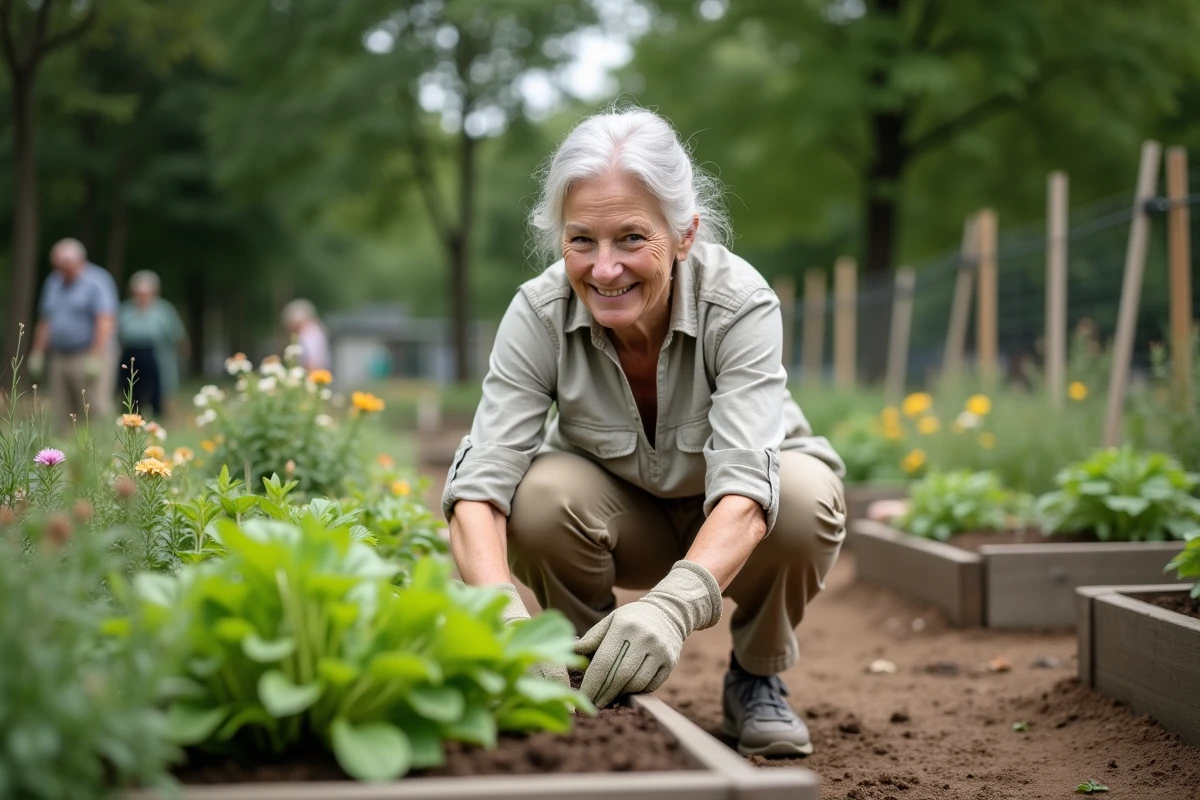
More and more eco-friendly retirement homes are emerging, a sign that environmental issues are entering the senior care sector. These establishments reinvent community living by integrating green spaces that promote biodiversity and create places for exchange. The therapeutic garden, now common in many nursing homes in France and elsewhere, connects residents to nature: the benefits are numerous, from maintaining autonomy to soothing age-related disorders.
The creation of organic gardens follows the same logic. Planting, harvesting, sharing: these gestures revive the spirit of community, value everyone’s skills, and give meaning to daily life. Even better, the harvests feed the establishment’s kitchen, reducing dependence on long supply chains and favoring healthier food.
Here are the main developments transforming residents’ daily lives:
- Green spaces: places for meeting, activities, and breathing, conducive to conviviality.
- Therapeutic gardens: valuable tools for supporting loss of autonomy, stimulating the senses and the mind.
- Organic gardens: collective workshops, transmission of agricultural skills, anchoring in the long term.
This model, supported by both public and private sectors, is taking root in Canada, France, and several of our European neighbors. It offers a realistic path to support aging, combining a healthier lifestyle, respect for living beings, and strengthening intergenerational bonds. And what if, tomorrow, green became the dominant color of our retirement homes?