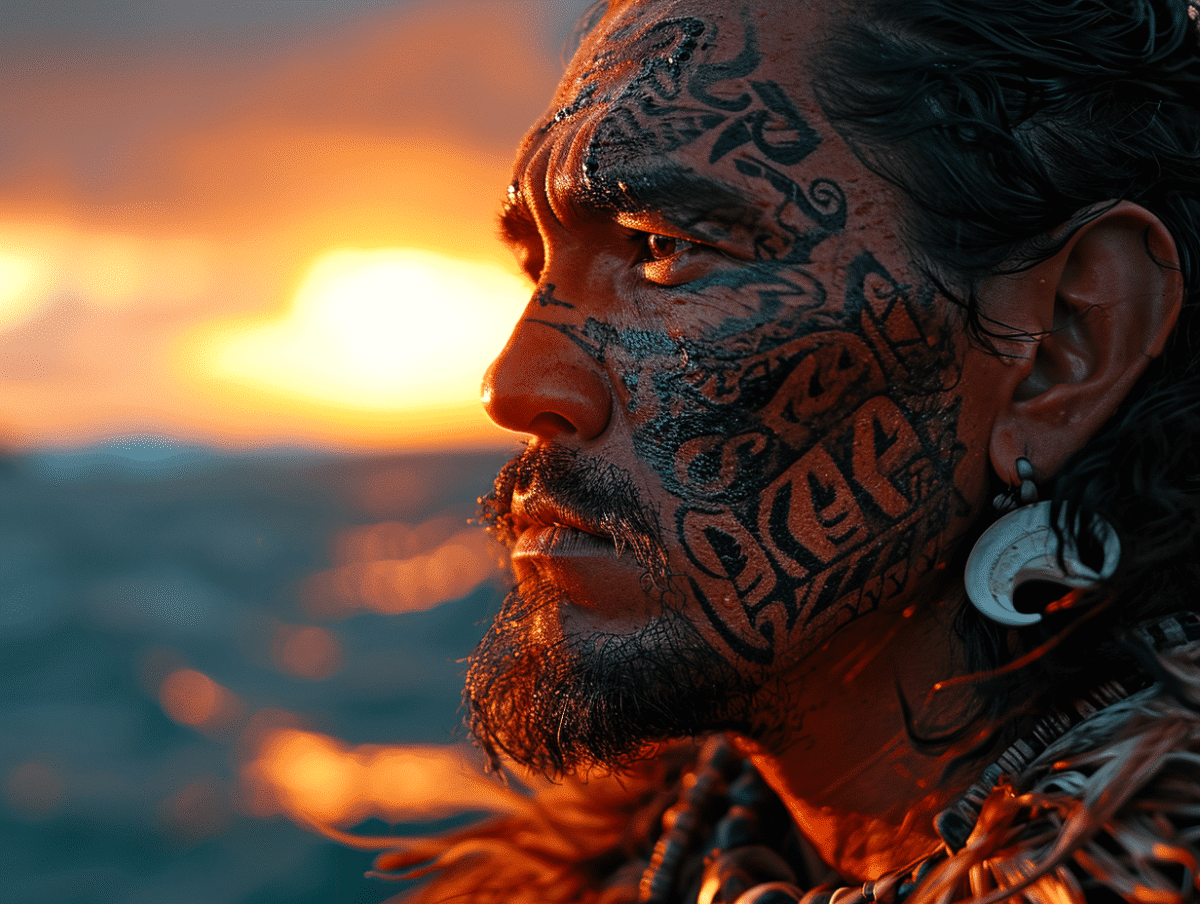
The vast expanses of water and the scattered islands of Oceania are the cradle of fascinating myths, populated by gods, goddesses, and supernatural beings. These tales, passed down from generation to generation, are deeply rooted in the culture and traditions of the Oceanic peoples. They reflect not only their intimate connection with the sea but also their understanding of the forces of nature and their quest for meaning in the face of the mysteries of the universe. Exploring these legends is to immerse oneself in a world where the spiritual and the everyday are inextricably intertwined.
The mystical origins of the Oceanic islands
In the immensity of the Pacific, each island tells a story of creation, a beginning of the world unique to its culture and traditions. These narratives, often unknown to the general public, evoke gods shaping the emerged lands with a simple gesture or through cosmic struggles. In French Polynesia, the origin of the islands intertwines with the adventures of creator deities, who, according to beliefs, emerged from the marine depths to offer humanity their homeland. The study of these legends, conducted notably by the Journal of the Society of Oceanists, based in Paris, offers a fascinating dive, a true Journey to the Land of Wonders, into the collective imagination of these island peoples.
The islands of Tonga or Tahiti, to name just a few, are imbued with this mythological dimension that makes them much more than mere geographical points on a map. There, the land is not an inert entity but the fruit of divine gestation, the result of the will of ancestors and guardian spirits. These narratives, often tinged with mystery and magic, give meaning to geography and infuse a soul into the natural environment. The mythology of Oceania thus presents itself as an essential backdrop for understanding the sacred relationship that binds man to his island, akin to the immeasurable bonds that unite children to their parents.
Beyond their narrative value, these legends constitute an invaluable cultural heritage that deserves recognition and preservation. Through the centuries, they have shaped the identity of Oceanic peoples and continue to nourish a powerful sense of belonging. Researchers and enthusiasts of Oceanic mythology are invited to follow their leap into the content of this plan, to explore these ancestral tales to grasp their full richness and significance. These stories, although ancient, remain alive, vibrant, and are witnesses to a civilization in constant interaction with its environment, in a perpetual dialogue between the past, present, and future.
The emblematic deities and creatures of Oceanic mythology
At the heart of the myths of the Pacific, a host of deities reigns over the world of the islands, shaping life, cosmic order, and human destinies. Among these figures, Maui, half-man, half-god, occupies a central place in many Oceanic cultures. A cultural hero, he is known for his extraordinary feats, such as capturing the sun to prolong the day or the act of fishing for islands from the ocean’s depths. Other deities, such as the creator gods of heaven and earth, hold a prominent place in the Oceanic pantheon, establishing an inseparable link between man and the surrounding universe.
Beyond the great celestial entities, the mythological fauna of Oceania is teeming with creatures as diverse as they are enigmatic. Their appearances in legends are often metaphors for natural phenomena or embodiments of moral values. These creatures, whether benevolent or malevolent, play a didactic and initiatory role for the communities that pass down their stories from generation to generation.
The writings of specialists, available in the collections of Abraxas-Libris in France, or through bibliographic reference platforms such as EndNote and RefWorks, constitute a valuable source for those seeking to penetrate the mysteries of these myths. The works, often written by prominent members of the Society of Oceanists, open windows into these worlds where the sacred and the profane intertwine, where mythology echoes the daily reality in the islands.
The place of these myths in Oceanic societies is not anecdotal; it is part of a vibrant oral tradition that continues to influence the art, literature, and philosophy of life of the islanders. France, like Europe, must pay particular attention to these narratives, which contribute to a better understanding of global cultural diversity. They remind us of the richness of human imaginations and the depth of the bonds that unite beings to the forces of nature.